

IQF Pineapple Buyer Guide: Iqf Pineapple: Pineapple Is Vietnam’s Most Versatile IQF Fruit Export
Vietnam is among the world’s top 10 pineapple producers, harvesting over 700,000 tonnes annually across the Mekong Delta, Central Highlands, and northern provinces. While fresh pineapple exports remain modest — limited by shelf life and logistics — IQF pineapple has become one of Vietnam’s most reliable frozen fruit exports, shipped to buyers in the US, EU, Japan, Korea, and the Middle East year-round.
IQF pineapple is one of the most widely used frozen fruits globally. It ranks among the top three IQF fruits traded worldwide (alongside mango and strawberry), with demand driven by smoothie manufacturing, bakery, foodservice, and the ready meal sector. The global IQF fruit market is projected to reach $35 billion by 2035, and pineapple holds approximately 14% of global IQF fruit demand by volume.
This IQF pineapple buyer guide covers specifications, cut types, pricing, quality benchmarks, and a sourcing checklist for importers evaluating Vietnamese suppliers.
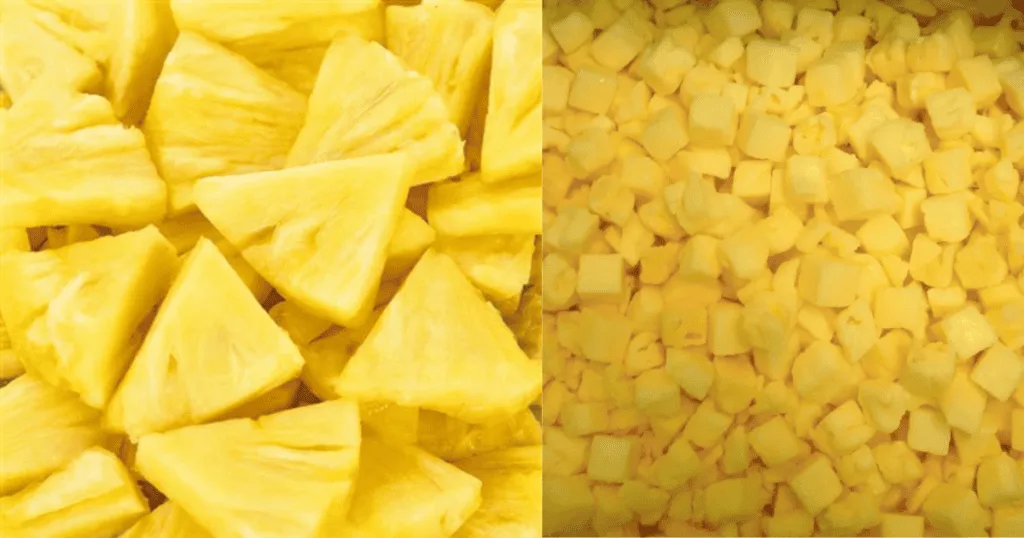
IQF Pineapple Cut Types
Vietnamese IQF pineapple is available in a wide range of cuts. The cut you need depends entirely on your end application:
| Cut Type | Dimensions | Primary Application |
|---|---|---|
| Chunks | 15–25mm pieces | Smoothies, yogurt, fruit mixes, bakery |
| Tidbits | 8–15mm small dice | Pizza toppings, fried rice, ready meals, salsas |
| Rings / slices | Whole rings, 15–20mm thick | Grilling, garnish, upside-down cakes, retail packs |
| Half rings | Half-moon slices | Foodservice plating, fruit salad, catering |
| Spears / sticks | Wedge-shaped, 60–80mm long | Snacking, skewers, fruit cups |
| Crush / pieces | Irregular 5–15mm pieces | Jam, sauce, bakery filling, ice cream inclusion |
Chunks and tidbits account for roughly 70% of IQF pineapple trade volume. Chunks are the default format for smoothie manufacturers and fruit blend companies. Tidbits dominate pizza and ready meal applications. Rings are the premium format — priced 10–15% above chunks — and are popular in retail packs and foodservice.
Vietnamese Pineapple Varieties for IQF
Two varieties dominate Vietnam’s IQF pineapple production:
Queen pineapple. The traditional Vietnamese variety, Queen pineapple is smaller (0.5–1.0 kg per fruit), with deep yellow flesh, high Brix (14–18°), and an intense, aromatic sweetness. It is the preferred variety for premium IQF pineapple due to its superior flavor. However, the smaller fruit size results in lower processing yield and higher labor cost per kg of finished product.
Cayenne (Smooth Cayenne). Larger fruit (1.5–3.0 kg), lighter yellow flesh, Brix 12–16°, milder flavor. Cayenne is the global standard for industrial pineapple processing — used by canned pineapple giants like Dole and Del Monte. For IQF, Cayenne offers higher yield per fruit and lower processing cost. Most bulk IQF pineapple from Vietnam uses Cayenne.
When requesting quotes, specify which variety you want. The price difference between Queen and Cayenne can be 20–30%, and the flavor profile differs significantly. Queen is a selling point for premium retail products; Cayenne is the economical choice for food manufacturing where pineapple is one ingredient among many.
IQF Pineapple Buyer Guide: Product Specifications
IQF Pineapple Chunks (Cayenne — Standard Grade)
| Parameter | Specification |
|---|---|
| Variety | Cayenne (Smooth Cayenne) |
| Cut size | 15–25mm chunks |
| Color | Yellow to golden yellow |
| Texture | Firm, intact pieces after thawing |
| Brix | ≥12° |
| pH | 3.3 – 4.0 |
| Moisture | 80–86% |
| Core content | None (core removed) |
| Peel/eye residue | None |
| Broken pieces | ≤10% by weight |
| Freezing method | IQF at –30°C to –40°C |
| Storage | –18°C or below |
| Shelf life | 24 months from production |
| Packaging | 10 kg PE bag in corrugated carton |
Microbiological Standards
| Test | Limit |
|---|---|
| Total Plate Count | ≤100,000 CFU/g |
| E. coli | ≤10 CFU/g |
| Salmonella | Absent in 25g |
| Listeria monocytogenes | Absent in 25g |
| Yeast & Mold | ≤1,000 CFU/g |
This IQF pineapple buyer guide emphasizes key quality parameters to monitor: Brix (sweetness), core removal (no hard white core pieces), eye removal (no brown “eyes” remaining on surface), and broken piece percentage. Broken pieces above 10% indicate either overripe raw material or excessive mechanical handling during processing.
Processing Steps
Step 1: Receiving and grading. Whole pineapples arrive from farms within 24 hours of harvest. Fruit is graded by size, ripeness (skin color), and defects. Underripe (green) and overripe (brown/fermented) fruit is rejected. Target ripeness: 50–75% yellow skin color.
Step 2: Peeling, coring, and eye removal. Automated or semi-automated peeling machines remove the outer skin and core simultaneously. The remaining “eyes” (small brown spots embedded in the flesh) are removed by hand or by a secondary trimming machine. Eye removal is the quality-critical step — any eyes left on the finished product reduce the grade.
Step 3: Cutting. Peeled, cored cylinders are fed into cutting machines configured for the target cut: chunks, tidbits, rings, or spears. Cut size is calibrated by blade spacing and verified by random sampling during production.
Step 4: Washing and draining. Cut pieces pass through a wash tank (sometimes with a mild citric acid solution to preserve color), then drain on a vibrating screen. Excess surface water must be removed before freezing to prevent excessive ice glazing.
Step 5: IQF freezing. Drained pieces enter the IQF tunnel at –30°C to –40°C. Belt speed and load density are critical: overloading the belt causes pieces to clump together instead of freezing individually. Residence time is 20–30 minutes for chunks, longer for rings.
Step 6: Glazing (optional), metal detection, packing. Some buyers request 0–5% ice glazing for surface protection. Frozen pieces pass through metal detection, then are weighed and packed into PE bags inside corrugated cartons.
IQF Pineapple Buyer Guide: Pricing
| Cut Type | Variety | FOB Price (USD/kg) | Net Weight per 20’RF |
|---|---|---|---|
| Chunks | Cayenne | $0.90 – $1.30 | ~18,000 kg |
| Chunks | Queen | $1.20 – $1.70 | ~18,000 kg |
| Tidbits | Cayenne | $0.85 – $1.25 | ~18,000 kg |
| Rings | Cayenne | $1.10 – $1.50 | ~17,000 kg |
| Crush / pieces | Cayenne | $0.70 – $1.00 | ~19,000 kg |
IQF pineapple is one of the most price-competitive IQF fruits. Cayenne chunks from Vietnam at $0.90–$1.30/kg FOB compare favorably with Costa Rican and Thai product. Queen pineapple commands a premium but is worth it for applications where pineapple flavor needs to stand out — premium fruit blends, high-end smoothie bars, and retail packs where the ingredient list is short.
A standard 20’RF container holds approximately 17,000–19,000 kg net of IQF pineapple depending on cut type and packaging. Mixed containers with other IQF fruits (mango, passion fruit, dragon fruit) are common and allow importers to test multiple products with one shipment.
IQF Pineapple vs Canned Pineapple
Many buyers — especially in pizza and foodservice — have historically used canned pineapple. Here is why the industry is shifting toward IQF:
| Factor | IQF Pineapple | Canned Pineapple |
|---|---|---|
| Texture | Firm, retains bite | Softer, sometimes mushy |
| Sugar content | Natural only | Often in syrup (added sugar) |
| Ingredient label | “Pineapple” | “Pineapple, water, sugar, citric acid” |
| Portion control | Free-flowing pieces, easy to portion | Liquid + solids, requires draining |
| Waste | Near zero | 20–30% liquid waste (brine/syrup) |
| Storage | –18°C freezer | Ambient shelf |
| Shelf life | 24 months frozen | 36 months ambient |
| Clean label | Yes | No (added ingredients) |
The clean label trend is the primary driver of the shift. Food manufacturers reformulating products to meet “no added sugar” or “single ingredient” claims are switching from canned to IQF across pizza, yogurt, bakery, and ready meal categories. IQF also eliminates the draining step in production lines, improving throughput.
Quality Issues and Prevention
Core fragments. Hard, white core pieces mixed into chunks or tidbits. Coring machines occasionally leave core attached to flesh. Prevention: specify “zero core tolerance” and require the supplier to demonstrate secondary inspection after cutting.
Eye residue. Brown spots on the surface of pineapple pieces. These are the pineapple “eyes” not fully removed during processing. They are harmless but look unappetizing and indicate poor trimming. Premium grade should have no visible eyes on more than 3% of pieces.
Excessive browning. IQF pineapple should be yellow, not brown. Browning indicates enzymatic oxidation from slow processing or extended hold time between peeling and freezing. Specify maximum processing time from peel to freeze: 2 hours is the industry benchmark for premium product.
Low Brix. Pineapple processed from underripe fruit tastes acidic and lacks sweetness. Specify minimum Brix (≥12° for Cayenne, ≥14° for Queen) and require testing on every COA.
Clumping. Pineapple chunks stuck together indicate IQF tunnel overloading. Free-flowing pieces are essential for food manufacturing where automated portioning systems require individual pieces. Specify “free-flowing” in your order and verify by checking random cartons upon arrival.
Buyer Checklist: Sourcing IQF Pineapple from Vietnam
- Select variety and cut. Cayenne for cost efficiency, Queen for premium flavor. Chunks, tidbits, rings, or crush — based on your end application.
- Specify Brix minimum. ≥12° for Cayenne, ≥14° for Queen. Include in your purchase order.
- Request samples of both varieties. The flavor difference between Queen and Cayenne is significant. Let your product development team evaluate before committing to a container.
- Define grading standards. Maximum broken pieces (≤10%), core fragments (zero), eye residue (≤3% of pieces), glazing (0–5%).
- Verify certifications. FDA facility registration, ISO 22000 or HACCP, COA per lot.
- Consider mixed containers. If you are testing the Vietnamese supply, combine pineapple with mango, passion fruit, or dragon fruit in one container to evaluate multiple products simultaneously.
- Plan around harvest peaks. Best prices and highest Brix available during peak harvest: April–July for the South, June–September for the North. Off-season product is available from cold storage but may be 3–6 months old.
- Negotiate annual pricing. Pineapple is a year-round crop in Vietnam with relatively stable pricing. Annual contracts with quarterly pricing adjustments offer better rates than spot orders.
IQF Pineapple Buyer Guide: Market Outlook
Global IQF pineapple demand is supported by several durable trends. The smoothie and smoothie bowl category continues growing at 7–8% annually in North America and Europe. Clean label reformulations in pizza, bakery, and ready meals are converting canned pineapple users to IQF. Plant-based and health-focused consumer trends favor fruit-forward products where IQF pineapple is a key ingredient.
Vietnam’s position in the IQF pineapple market is strengthening. The global IQF fruits and vegetables market is projected to grow from its current valuation to $18 billion by 2030, at a CAGR of 5.7%. Pineapple’s 14% share of IQF fruit volume makes it one of the anchor products for any serious IQF supplier — and Vietnam’s combination of competitive pricing, year-round supply, and multiple variety options makes it a strong sourcing origin.
For importers currently sourcing from Costa Rica, Thailand, or the Philippines, Vietnam offers a diversification option with comparable or better pricing and the operational advantage of sourcing from a country with a broad IQF product portfolio — allowing mixed container orders across fruits, vegetables, and herbs from a single origin.
Vietfrost is a Vietnamese manufacturer and exporter of IQF frozen fruits and vegetables, including IQF pineapple in chunks, tidbits, rings, spears, and crush formats. Queen and Cayenne varieties available. ISO 22000 and HACCP certified. FOB Ho Chi Minh City. Minimum order: 1×20’RF container. Contact: vietfrost.com/contact